先生 (Sensei) Instructors
“Karate is a lifelong pursuit”
The Twenty Guiding Principles of Karate
Guiding Principle 9
Gichin Funakoshi “Father of Modern Karate”
At Tahoma Karate, each of our instructors are determined to continue their endless improvement in Karate. They each believe that their skill in Karate directly influences their students. This is also true with each and every instructor that Tahoma Karate brings in to help. We encourage our instructors to also seek instruction in other martial arts as those who study martial arts should “Touch upon all the arts” (Musashi, 1645)1. This can be difficult for some of our instructors and a large part of why they may have not done so yet is due to their age. Needless to say, it is something that is encouraged and something that we wish each and everyone to do.
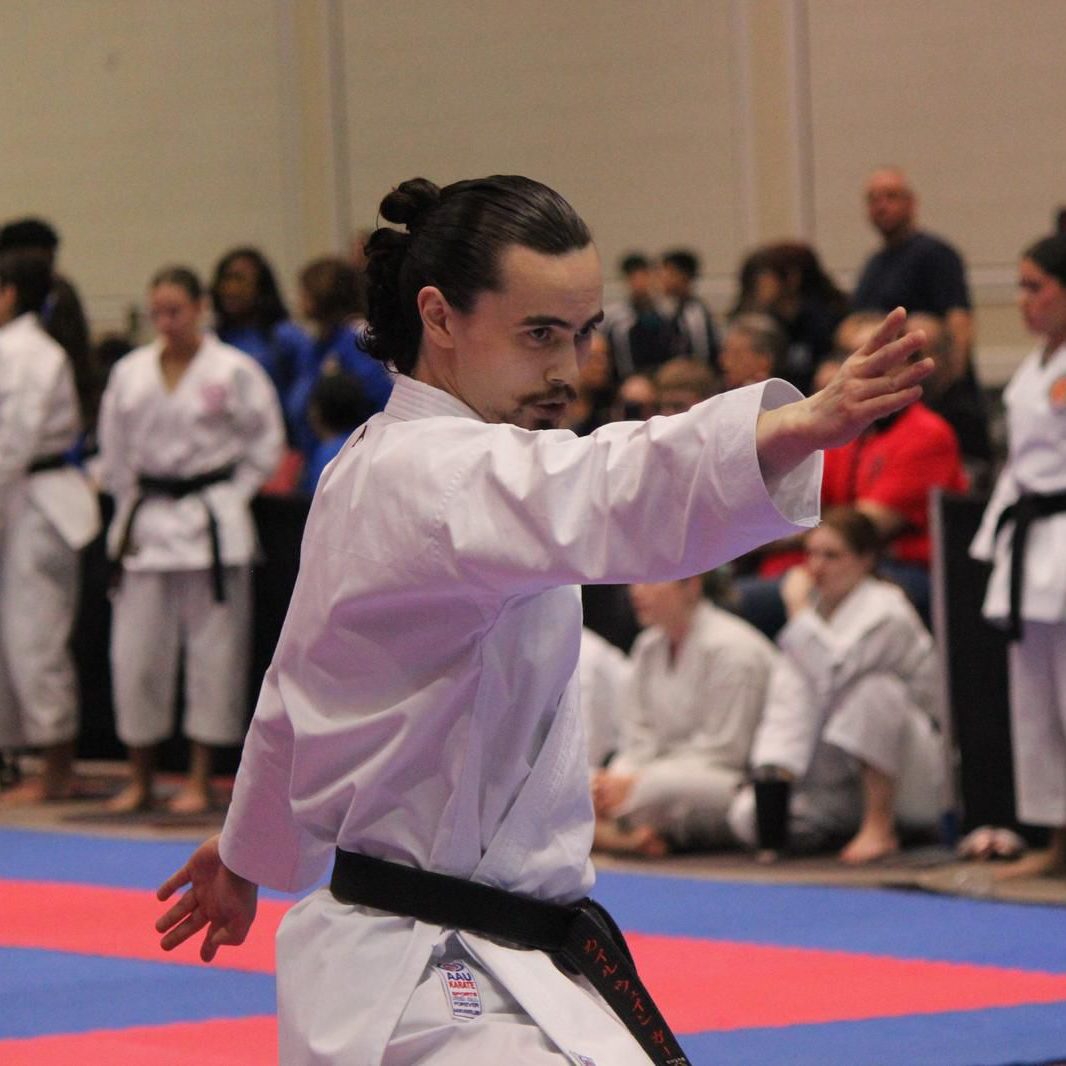
Head Instructor
3rd Dan
Kyle Gough
Kyle Gough Sensei began his Karate journey in 2006, following closely in his father’s (John Gough) footsteps. He began teaching Karate to Juniors (students under ~16) in 2013 and has been doing so ever sense. Along with his responsibilities at Tohma Karate, Kyle also guest teaches at Shoreline Karate Club on occasion. His father is the Head Instructor at Shoreline Karate Club and his mother is also an Instructor there. Kyle’s younger brother is also a Karate Instructor at a different school in Seattle.
Kyle also regularly competes in Karate tournaments and while it is not his main focus when teaching Karate, he is more than happy to teach any student to compete and coach them at the Tournament. His competition history is long and through his time competing he has won and coached many students who have won many tournaments at various levels. Locally, he is very well known at tournaments for his skill with the Bo (Long staff).
Outside of Karate Kyle has emersed himself in the music world. He is a percussionist and is currently studying music at Pacific Lutheran University in Tacoma pursing a Bachelor of Arts in Music. He loves associating Karate practice to his music practice and his approach to music is greatly influenced from his Karate experience. In his approach to music he does his best to live by the passage “hence [music] was not for the technique, the art as such, that music was learned; for the ultimate object was purification of heart, since it was said that no harmony of sound is attainable without the player’s heart being in harmony with itself.” (Nitobe, 1900)2.
1 Musashi, Miyamoto. (1645). The Book of Five Rings. Shambhala Publications, Inc.
2 Nitobe, Inazo. (1900). The Way of the Samurai. Sirius Publishing.
 Tahoma Karate